

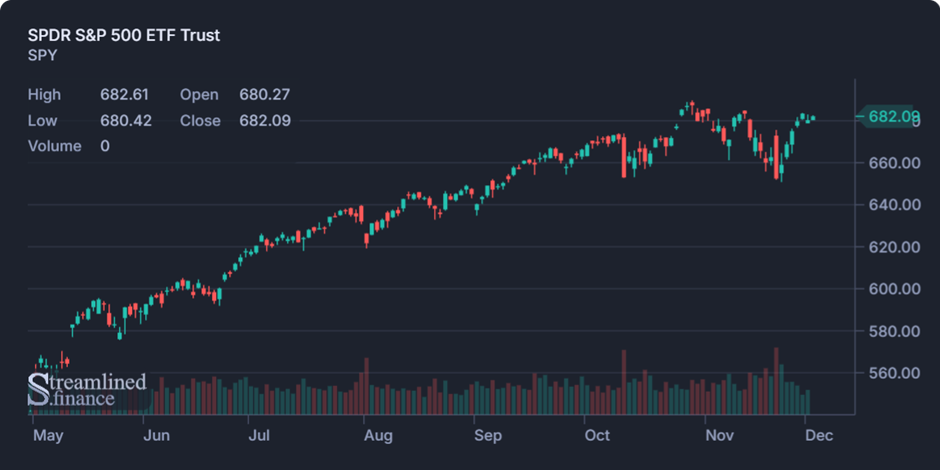
The S&P 500 has swung sharply over the past two weeks. From November 14 to 21, the index fell 1.95% as softer economic data and AI bubble concerns weighed on sentiment. But the following week reversed the entire drop, and more, with a 3.73% rebound to 6849.09 by Friday market closing.
At the employment front, businesses across the country reported a noticeably softer labor market with hiring slowing, work hours being trimmed, and companies increasingly relying on attrition rather than layoffs. A handful of employers pointed to early signs of AI quietly reshaping their staffing needs as some entry-level roles were automated or made redundant by productivity gains.
The consumer side of the economy looked equally divided. Middle-income households showed signs of pulling back on discretionary spending while high-income households carried on with relative resilience. Travel and tourism contacts described a more cautious tone from consumers. Retailers outside the premium segment warned that holiday demand could look uneven.
Manufacturing provided little relief. US factories contracted for the ninth straight month in November as demand weakened and input costs rose. Executives repeatedly cited import tariffs on vehicles, auto parts, and industrial components as a major headwind forcing either layoffs or production shifts to lower-cost regions.
Yet the global picture looked surprisingly steadier. The OECD raised its growth outlook for the United States to 2% in 2025, crediting a wave of artificial intelligence investment, targeted fiscal support, and expectations of rate cuts next year. The organization predicted global growth of 3.2% in 2025 before easing in 2026. Even so, inflation in the US is expected to peak again in mid-2026 as tariff pass-through feeds into prices before slowing back toward the Federal Reserve’s target by mid-2027.
That brings the spotlight to the Federal Reserve’s December 9-10 meeting. Markets are quietly preparing for the possibility of a rate cut after BofA Global Research projected a 25-basis point reduction based on weakening labour data and recent comments from policymakers. It now sees two additional quarter-point cuts in 2026, in June and July, bringing the terminal rate to 3.00%-3.25%. “Our forecast of additional cuts next year is due to the change in leadership, not our read on the economy,” analysts at BofA said in a note. White House economic adviser Kevin Hassett has emerged as the frontrunner to be the next U.S. Federal Reserve chair, according to reports last week.
In the AI race, a shifting power dynamic introduced new intrigue. Google accelerated its momentum against Nvidia by unveiling Ironwood, its most advanced TPU yet, and more than four times faster than its predecessor. The chip will underpin the heaviest AI workloads, including real-time chatbots and emerging AI agents. Anthropic plans to deploy up to one million of them for its Claude model. Meta is in discussions to spend billions on Google’s chips starting 2027. Analysts estimate Google could capture nearly 10% of Nvidia’s annual revenue if these deals expand. Google’s recent cloud partnerships, early reviews of its latest Gemini 3 model, and a significant investment from Berkshire Hathaway have pushed it deeper into the AI race as a growing number of enterprises turn to its TPUs for performance and cost advantages.
Weekly Earnings Roundup: Surprises & Misses
Several major companies released their earnings in the last 2 weeks, including Trip.com (NASDAQ: TCOM), Home Depot (NYSE: HD), Pinduoduo (NASDAQ: PDD), Nvidia (NASDAQ: NVDA), Walmart (NYSE: WMT), Alibaba (NYSE: BABA), Dell (NYSE: DELL), and HP (NYSE: HPQ).
Nvidia delivered another blockbuster quarter with record revenue of $57.0 billion, up 22% QoQ and 62% YoY. Profit surged to $31.9 billion. Adjusted earnings per share landed at $1.30 compared with the $1.25 estimated by Wall Street experts. Yet the share price remained muted across with concerns of an AI bubble impacting the overall market.
Walmart posted an upbeat third quarter with both revenue and earnings surpassing expectations. The company raised its full-year outlook, citing strong e-commerce growth and new customers across income groups. CFO John David Rainey noted that tariff-related cost pressures remain significant, but said the retailer has found ways to absorb part of the burden to protect customers. The stock has climbed 10% in the past two weeks.
Dell reported mixed results. Third-quarter revenue came in slightly below expectations, but the company projected a powerful fourth quarter driven by $9.4 billion in AI sales. It expects $31.5 billion in Q4 revenue, well above consensus estimates of $27.59 billion. The shares rose 10% over the past two weeks.
Alibaba posted a solid quarter as cloud revenue surged 34% YoY, driven by accelerating AI-related demand. Total revenue rose to 247.8 billion yuan from 242.65 billion yuan a year earlier. CEO Eddie Wu said the company is prepared to increase AI investment even further if demand remains strong.
Top Gainers
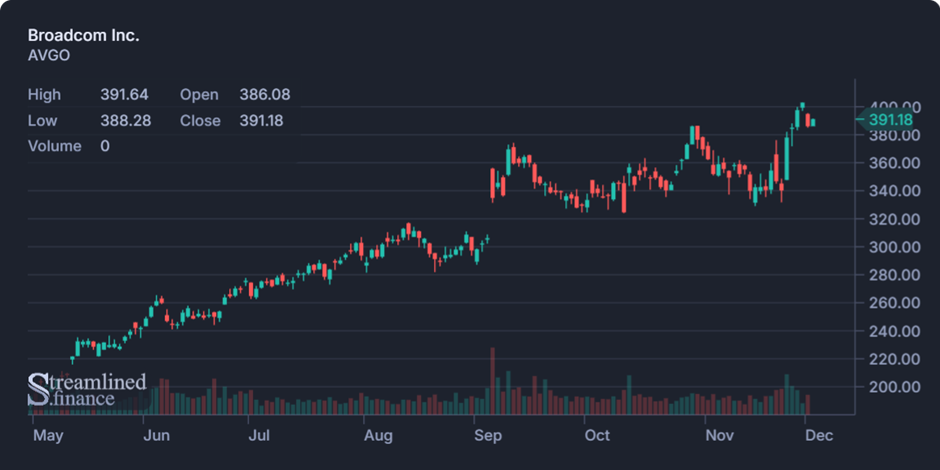
Broadcom (NASDAQ: AVGO) jumped 18% this week as analysts raised their price targets ahead of earnings. The surge was fueled by optimism around AI-driven demand and deepening partnerships with large technology companies, including Google and Meta.
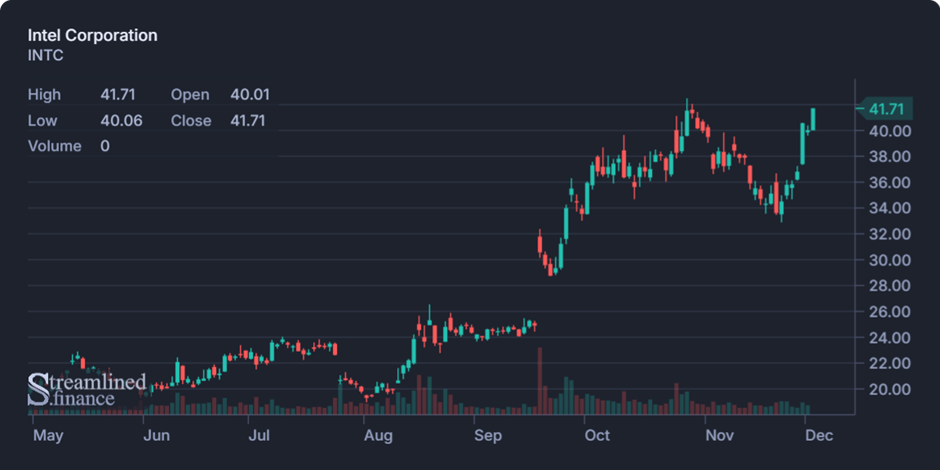
Intel (NASDAQ: INTC) also climbed 18% after reports suggested it could become a foundry supplier for Apple’s next-generation M series chips. The potential deal revived investor sentiment following months of uncertainty around the company’s manufacturing roadmap.
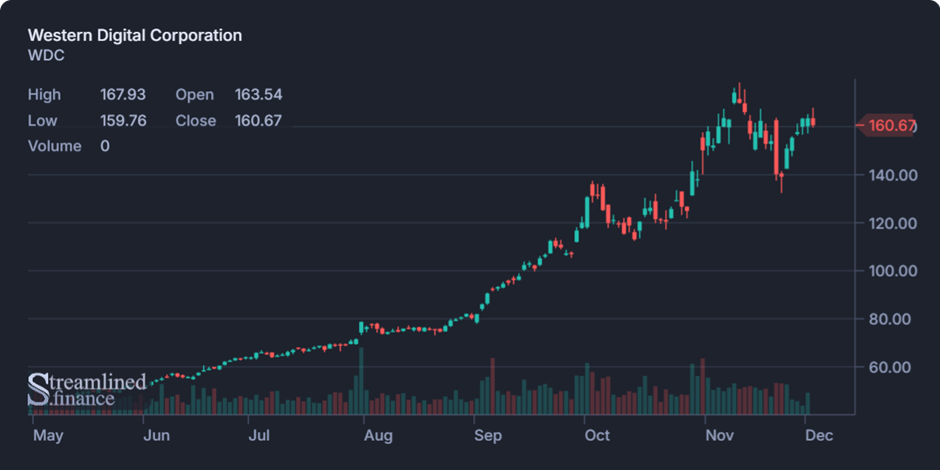
Western Digital (NASDAQ: WDC) gained 17% after Citi boosted its price target, citing strengthening momentum tied to AI storage demand.
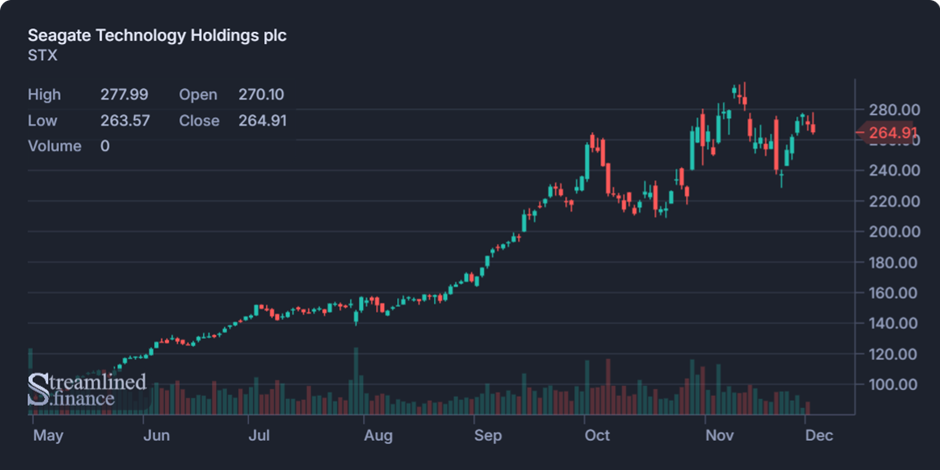
Seagate (NASDAQ: STX) saw a similar 17% gain after analysts signalled renewed confidence in the broader storage industry.
Top Losers
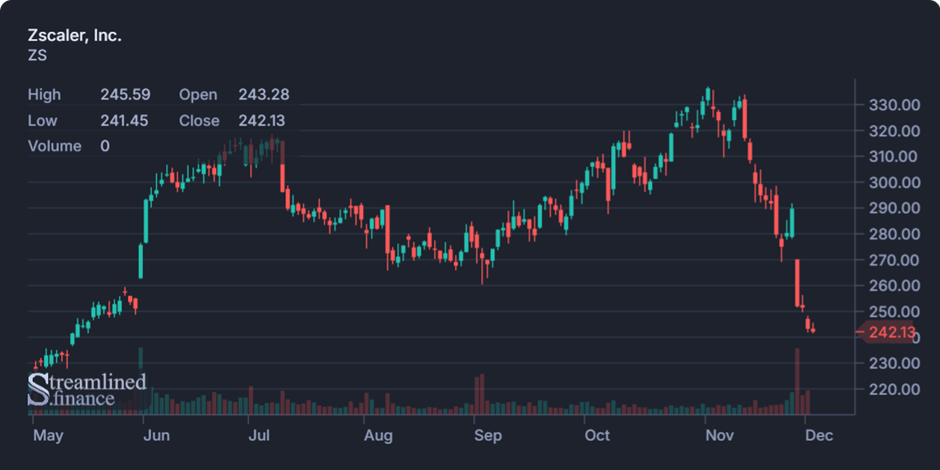
Zscaler (NASDAQ: ZS) fell 9% after strong revenue and earnings were overshadowed by a miss on billings, a key indicator of future growth. Investors took the shortfall as a warning sign of cooling demand.
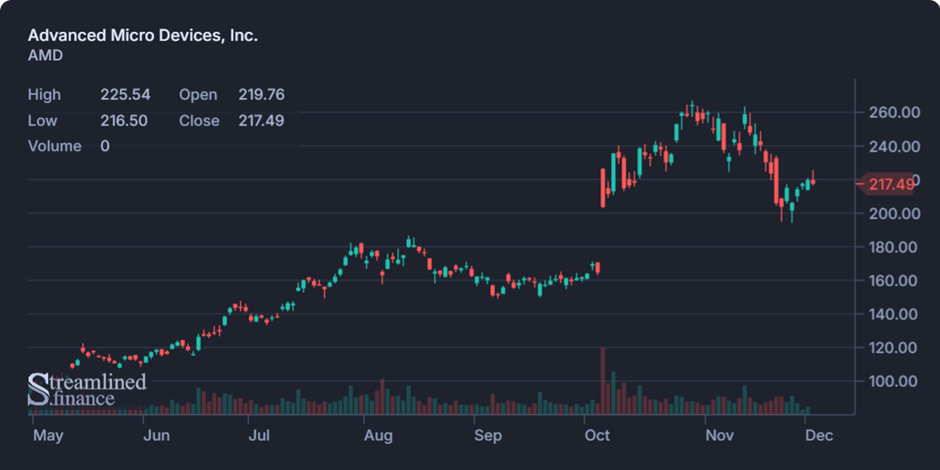
AMD (NASDAQ: AMD) dropped 17% as competition fears intensified following reports that Meta could purchase large volumes of Google’s AI chips. The news raised concerns about AMD’s share in the next phase of the AI chip cycle.
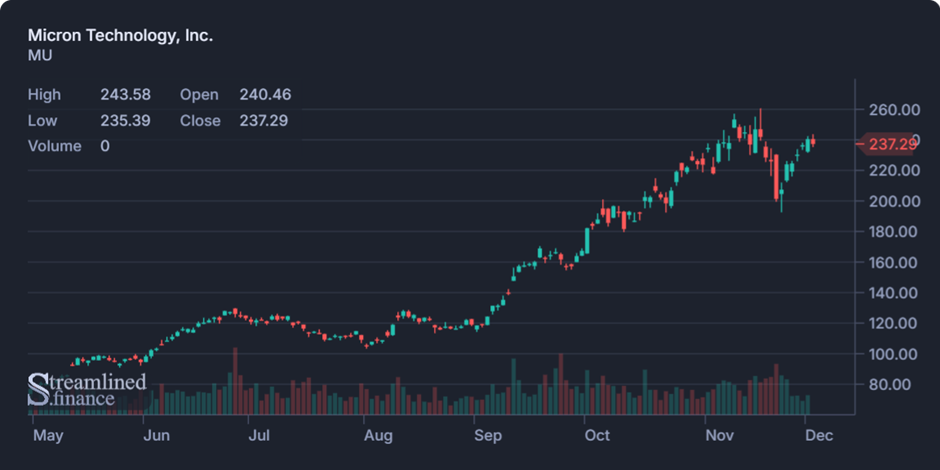
Micron (NASDAQ: MU) declined 15% last week as investors rotated out of AI-exposed semiconductor stocks, though the share price has recovered this week.
Upcoming Earnings: Key Stocks to Monitor
Next week’s spotlight will fall on Credo Technology (NASDAQ: CRDO), MongoDB (NASDAQ: MDB), CrowdStrike (NASDAQ: CRWD), Salesforce (NYSE: CRM), Snowflake (NYSE: SNOW), Toronto-Dominion Bank (NYSE: TD), Bank of Montreal (NYSE: BMO), and Hewlett Packard Enterprise (NYSE: HPE).
The following week will shift focus to AutoZone (NYSE: AZO), Ferguson (NYSE: FERG), Adobe (NASDAQ: ADBE), Synopsys (NASDAQ: SNPS), Broadcom (NASDAQ: AVGO), Costco (NASDAQ: COST), and Lululemon (NASDAQ: LULU).
The upcoming Federal Reserve meeting and the trajectory of rate cuts will heavily influence how markets behave in the weeks ahead.